
Nether Marketing · March 2026 · Digital Marketing & Analytics .
Every day, thousands of small business owners sit down at their phones, open social media, and start posting. They share a product photo, write a caption, add some hashtags, and wait. Days pass. A few likes roll in, but it’s mostly from friends and family. No new customers. No sales. Just silence.
Then, they try again. This time a Reel. Then a Facebook ad. Then maybe a logo redesign. Still nothing. The frustration grows, the budget keeps on shrinking, and eventually the question becomes: “Is marketing even worth it?” and the answer is yes. But it all depends on how you do it.
The Survival Problem Nobody Talks About
Before we get into marketing fixes, we need to look into what is happening to small businesses at the moment. The numbers don’t feel encouraging.
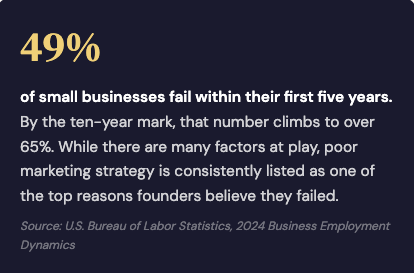
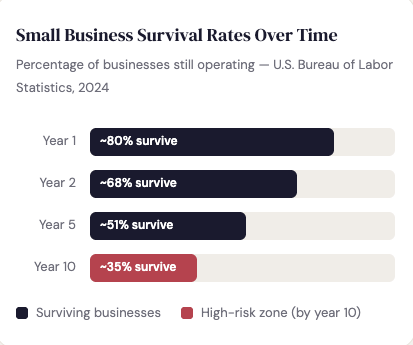
That is not a small number. Nearly half of the businesses that launch with a dream, a product, and a plan will not make it to year five. And most of them are not failing because they built a bad product. They are failing because the right people never found them.
Here is the part that makes this even harder: 78% of small businesses fail because they lack a well-developed marketing plan, according to research from the U.S. Bank. Not because they had bad ideas. Not because they were lazy. Because they were guessing.
The Social Media Trap (and Why Posting More Does Not Work)
Here is something almost every small business owner has experienced: spending hours creating content for social media, pressing posts, and watching the engagement flatline. It feels personal. But it is actually structural.
A 2024 survey found that two thirds of small and midsize businesses have no marketing at all. They show up on social media without a clear idea of what their goal is and, haven’t found what audience to pursue, no content strategy, and without any way to measure if what they are doing is actually working.
Social media is not free marketing. It is a platform that rewards consistency, clarity, and community. Without a deliberate strategy, it becomes a time sink. Research suggests that businesses waste up to 37% of their digital ad spend on channels that deliver no real results, simply because they are guessing where their audience spends time rather than finding out.
- Posting daily without a defined audience means you are talking to everyone, which usually means you are connecting with no one
- Chasing trending sounds and formats can boost views, but viral content almost never translates directly into loyal customers or consistent revenue
- Without tracking tools, it is impossible to know which posts are actually driving action versus which ones just feel good to make
- More than 54% of small businesses report struggling to produce enough content to maintain a consistent presence across even a few platforms
More content does not equal more customers. Visibility without intention is just noise.
The Audience Problem: Selling to Everyone Means Selling to No One
One of the most expensive marketing mistakes a small business can make is skipping the step that comes before any campaign: figuring out exactly who they are trying to reach. It sounds basic, but most owners skip it entirely because they are so eager to start promoting.
The result is marketing that feels generic. A caption that could apply to any business. An ad that targets a broad demographic. A brand voice that is pleasant but forgettable. And customers who scroll right past because nothing in the message made them feel like it was written for them. Understanding your audience is not just about demographics. It means knowing the problems they are trying to solve, the words they use to describe those problems, the platforms they actually use, and what would make them trust a brand enough to buy. Without that knowledge, even a big marketing budget gets wasted fast.

The brands that seem to be everywhere and grow fast are not posting more.They have figured out who they are for and they show up specifically for that person, consistently, across every channel. That targeted clarity is what makes marketing compound over time instead of constantly starting over from zero.
Your brand is a story unfolding across all customer touch points.” – Jonah Sachs
The Invisible Business: Why Search Visibility Changes Everything
While most small businesses focus all of their energy on social media, they are ignoring one of the most powerful and durable sources of new customers: search engines. Right now, someone in your area is typing a phrase into Google that perfectly describes what your business offers. The question is whether your business shows up when they do.
According to HubSpot’s 2026 State of Marketing Report, website, blog, and SEO efforts remain the number one ROI (Return on Investment) generating channel for marketers, ahead of paid social, email, and everything else. And small businesses that invest in blog content are 23% more likely than average to see a return from that investment.
Yet only 25% of small businesses even have a functioning website, and far fewer have any kind of SEO strategy in place. That means the vast majority of small businesses are invisible to people actively searching for their services. They are spending money on ads to interrupt people who are not looking, while the people who are actively ready to buy cannot find them at all.
SEO is not a quick fix. It builds slowly over time. But that is also exactly what makes it valuable. Once your business starts showing up in organic search results, it keeps showing up. Unlike a paid ad that disappears the moment your budget runs out, SEO creates lasting visibility that works around the clock.
When Every Brand Sounds Exactly the Same
If you spend enough time scrolling through Instagram you will notice a pattern. Everyone sounds alike, same phrases, same aesthetic, same trend, same audio. It almost starts to feel like you are looking at the same video over and over again.
Brand positioning is the discipline of figuring out what actually makes a business different, and then communicating that difference so clearly that the right customers feel it immediately. It is not about being loud or flashy. It is about being specific and honest about what sets you apart from every other option available. Without defining what your brand positioning is, your business ends up competing only on price. Because if customers cannot see a meaningful difference between two options, they will always choose the cheaper one. Strong positioning removes price from the center of the conversation. It gives people a reason to choose you that has nothing to do with a discount.
What a Marketing System Actually Looks Like
All of the problems described above share a common root: they happen when marketing is treated as a series of disconnected tasks rather than a unified system. Post a Reel here. Run an ad there. Redesign the logo. Try a new platform. Nothing connects, nothing builds, and the results stay unpredictable.
This is the gap that Nether Marketing was built to close. The agency works with small businesses and startups that are stuck in this cycle, which is visible enough to feel busy, but not getting the consistent leads and sales that growth actually requires. Rather than throwing tactics at the wall, Nether builds marketing systems designed so that every piece works together. The approach is grounded in a three-part framework that most small business marketing is missing entirely:
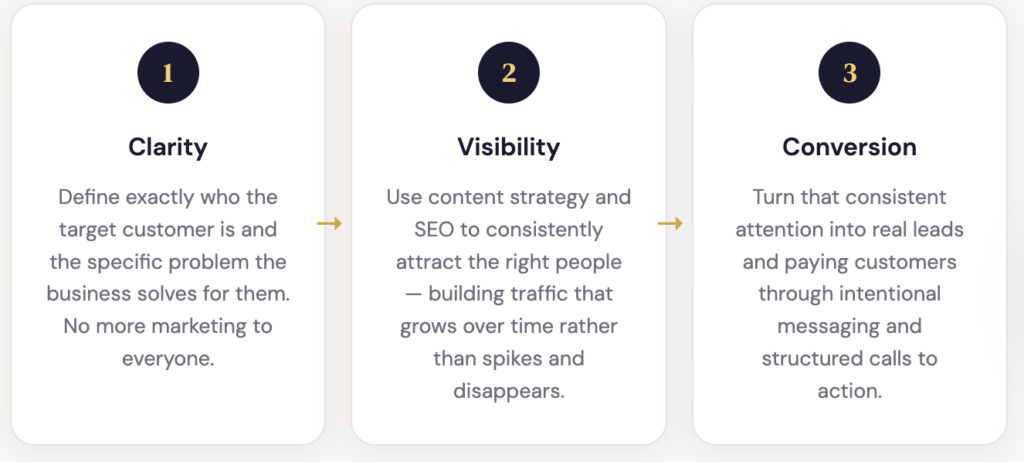
What makes this different from most agencies is the emphasis on integration. Content strategy, SEO, social media, and brand positioning are not separate services running in parallel. They are all parts of the same system, each one reinforcing the others. A blog post built around SEO also feeds social media content. A clear brand position makes ad copy dramatically more effective. When everything connects, the results compound.
Why a Blog Is Your Most Powerful Trust-Building Tool
Before you have ever bought anything, you probably did a little research. You checked their website. You looked for signs that they knew what they were talking about.When a first-time visitor lands on your website and finds a library of helpful, well-written content, something shifts. Then you stop being a stranger and start being an authority. The blog becomes proof that you understand your industry, that you have answers to the questions your customers are asking, and that you are not just trying to make a sale.
But making great content means nothing if no one can find it. That is where SEO comes in. Every post needs to be built around the words your customers are actually typing into Google. Using keywords, clear headings, descriptive titles, and internal links. This tells search engines your site is worth showing. According to HubSpot, businesses that blog consistently generate 55% more website visitors than those that do not.
For small businesses competing against bigger brands, this is the equalizer. A polished, SEO-optimized blog signals credibility in a way a homepage alone never can.
- Blog posts build familiarity and trust before a customer ever makes a purchase decision
- Answering common questions in writing shows transparency, one of the top drivers of first-time buying
- A single well-ranked post can bring in new customers for months or years after it is published.
- Consistent content signals your business is active, legitimate, and worth trusting
The best marketing does not feel like marketing.” – Tom Fishburne.
From Guessing to Growing
Small businesses do not fail at marketing because they lack effort. They fail because effort without a system is just noise. Posting without a clear audience, ignoring search engines, blending in instead of standing out, these are not just common mistakes. They are expensive ones.
The businesses that make it are not the ones with the biggest budgets or the most followers. They are the ones that use the best strategies to start building their business. They got clear on who they were talking to, showed up where their customers were already searching, and built a brand that earned trust before a single dollar was spent.
That is exactly what Nether Marketing helps you do. Whether you are a small business trying to figure out social media, a startup trying to grow without wasting budget, or a founder who simply does not have time to figure out marketing on top of everything else, but wants their efforts to be effective, Nether builds the system that does the work for you.
You built something worth finding. It deserves a strategy that works. Nether Marketing is ready to build that with you.
You can learn more about our brand here