Nether Marketing
For a small business, a website is not an online decoration. It is often the place where a potential customer decides whether the company looks trustworthy, understands the customer’s problem, and is worth contacting. A referral may introduce someone to your business, and a social post may earn attention, but your website is where that interest can become action.
That is why small business website design should be treated as part of the company’s sales and marketing system, not as a one-time art project. The best sites do more than look modern. They help the right people find the business, answer their questions, reduce uncertainty, and make the next step obvious.

A professional website should make a business easy to understand and trust.
VIEW NETHER MARKETING WEBSITE PACKAGES
1. Professional Small Business Website Design Builds Credibility
Imagine that a customer receives recommendations for two local contractors. One has a clear website with current information, real project photos, readable service descriptions, and an easy way to request a quote. The other has an outdated page with broken links and no clear contact option. Even if both contractors perform excellent work, the first one feels like the safer choice.
That reaction is not only about appearance. A strong website gives visitors the evidence they need to move forward. Consistent branding suggests attention to detail. Specific service information shows that the business understands its work. Customer reviews, certifications, policies, and examples reduce the perceived risk of making contact.
The goal is not to impress visitors with effects or complicated animation. It is to make the business feel legitimate and make important information easy to verify. A simple, well-organized website will usually build more confidence than an expensive-looking site that leaves people confused.
2. It Helps the Right Customers Find You
People regularly search online when they need a local service, want to compare options, or need an answer before buying. A business that cannot be found during that research is giving the opportunity to a competitor.
Google explains that its automated systems use web crawlers to discover pages, understand their content, and add eligible pages to its index. That means a website needs more than attractive visuals. It needs descriptive page titles, useful written content, logical headings, internal links, and pages that clearly explain the services being offered. These practices give search engines more context and give customers better answers. Google’s SEO Starter Guide provides a practical overview of these fundamentals.
SEO works best when small business website design and content strategy support each other. For example, a Utah landscaping company could build individual pages for sprinkler repair, lawn maintenance, and seasonal cleanup instead of listing every service in one short paragraph. Each useful page creates another opportunity to match a relevant search.
This does not guarantee the top position on Google. No honest designer can promise that. It creates a stronger technical and informational foundation that can improve visibility over time.

Search visibility helps local customers discover a business when they need its services.
3. Small Business Website Design Must Work on Mobile
A site is not truly effective if it only works on a large desktop monitor. Customers may visit while sitting in a car, comparing options inside a store, or trying to call a company between other tasks. On a phone, tiny text, crowded menus, and buttons that are difficult to tap create immediate friction.
Google uses the mobile version of a site for indexing and recommends creating a mobile-friendly experience. Its mobile-first indexing guidance emphasizes that the important content should remain available and usable on mobile devices.
Speed matters as well. Google’s Core Web Vitals measure loading performance, responsiveness, and visual stability. Current guidance recommends that the largest visible content load within 2.5 seconds, that interactions respond within 200 milliseconds, and that unexpected layout movement remain at or below 0.1. These targets are explained in Google’s Web Vitals documentation.
Business owners do not need to memorize those measurements. They do need a site that loads quickly, keeps buttons stable, compresses oversized images, and avoids unnecessary scripts. A smooth mobile experience removes obstacles between a visitor and a phone call, form submission, appointment, or purchase.
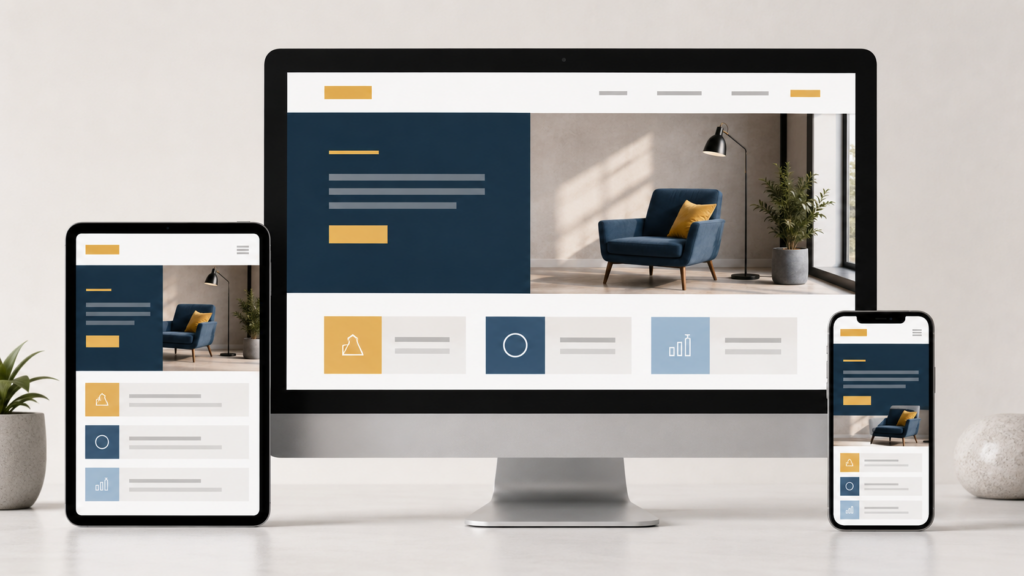
Responsive design keeps important content usable across screen sizes.
4. It Turns Attention Into Action
Traffic by itself does not create revenue. A website must help visitors understand what the company offers, why it is relevant, and what they should do next. When every page competes for attention, visitors often do nothing.
Effective small business website design gives each important page a job. The homepage introduces the company and directs visitors toward the main offer. Service pages explain benefits, answer objections, and show proof. The contact page removes friction and makes starting a conversation easy.
Calls to action should be specific and visible. “Request a Free Quote,” “Schedule a Consultation,” or “View Website Packages” tells the visitor exactly what will happen next. Vague links such as “Learn More” are sometimes useful, but they should not carry the entire conversion strategy.
The surrounding copy also matters. A button works better when the visitor already understands the value of clicking it. A service section should identify the customer’s problem, explain the solution, and establish trust before asking for action. Nether Marketing’s guide to turning website visitors into customers explains this conversion-focused structure in more detail.

Clear page structure and calls to action help turn attention into qualified leads.
READ THE WEBSITE CONVERSION GUIDE
5. It Gives You Control of Your Online Presence
Social media can help a business reach people, but a social profile is rented space. Platforms can change their algorithms, limit reach, remove features, or suspend accounts. A business website provides a central destination that the company controls.
That control makes marketing more consistent. Ads, social posts, printed materials, email campaigns, and Google Business Profile listings can all direct customers to one reliable source of information. Instead of rebuilding the full sales message on every platform, the website becomes the home for service details, portfolio examples, frequently asked questions, contact options, and company updates.
The U.S. Small Business Administration recommends connecting marketing activities to a defined plan instead of treating them as disconnected actions. Its marketing and sales guide explains that a marketing plan turns overall strategy into specific actions. A website can serve as the center of that system because each channel can lead back to a page designed for a particular audience or offer.
6. It Saves Time for the Owner and the Customer
Small-business owners often answer the same questions repeatedly: What do you charge? Which areas do you serve? How long does the process take? What is included? When are you available?
A useful website answers common questions before a phone call begins. That does not replace personal communication. It makes that communication more productive. Customers arrive with a clearer understanding of the offer, while the owner spends less time responding to people who are not a good fit.
This is another reason small business website design must begin with customer questions rather than visual trends. A useful site might include pricing ranges, service areas, timelines, intake forms, scheduling tools, or a short FAQ. The right features depend on how the business actually operates.
Automation should remain simple. A short quote-request form is often better than a long questionnaire. A clearly displayed phone number may be more valuable than a complicated chatbot. The best feature is the one that removes a real obstacle for the customer.
7. It Creates a Foundation You Can Measure and Improve
A printed flyer cannot show how people interacted with it. A website can. With properly configured analytics and search tools, a business can learn which pages attract visitors, which search queries create impressions, and which calls to action receive clicks.
Google Search Console can help owners measure search traffic, inspect indexing, and identify certain technical issues. Analytics tools can reveal how visitors move between pages and whether key actions are being completed. This information turns website decisions into testable questions.
If many visitors reach a service page but few request a quote, the offer may need clearer copy, stronger proof, or a simpler form. If mobile visitors leave unusually quickly, the page may load slowly or be difficult to use. If an important page receives no search impressions, its topic and structure may need improvement.
Measurement does not mean changing the site every week based on a small amount of data. It means checking performance regularly, identifying meaningful patterns, and improving one important element at a time.
What a Professional Website Should Actually Include
Good small business website design is not defined by the number of animations or the price of the theme. It is defined by whether the site helps the business and its customers accomplish their goals.
At minimum, a professional site should include:
A clear explanation of what the business does and who it serves
Simple navigation with descriptive page names
Responsive layouts that work across phones, tablets, and desktops
Compressed images and efficient pages that load quickly
Consistent colors, typography, and visual style
Visible contact information and relevant calls to action
Service pages built around real customer needs
Basic search optimization, including titles, headings, and internal links
Trust signals such as authentic reviews, credentials, policies, or work examples
Analytics and search-measurement tools configured around business goals
Accessibility should be part of the plan as well. The World Wide Web Consortium recommends meaningful headings, descriptive link text, clear instructions, and useful text alternatives for images. These practices make content easier to use for people with disabilities and often improve clarity for every visitor. Its web accessibility writing guidance offers a straightforward starting point.
When Is a DIY Website Enough?
A do-it-yourself site can be reasonable for a new business that is still testing an idea, has almost no budget, and only needs a basic page with accurate contact information. Paying for custom features before the business understands its customers would be wasteful.
Professional help becomes more valuable when the website is expected to generate leads, rank for competitive services, support paid advertising, connect multiple tools, or represent an established company. It is also worth considering when the owner is spending more time fighting the website than running the business.
The decision should be based on the site’s job. If it only needs to confirm that the business exists, a simple setup may work. If it needs to persuade, rank, collect leads, and support growth, strategy and execution matter much more.
A Website Should Work as Hard as the Business Behind It
A strong website will not fix a weak product, poor customer service, or an unclear offer. It will make a solid business easier to discover, understand, and trust. That is the real value.
Investing in small business website design means building an owned marketing asset that can support search visibility, customer education, lead generation, and future campaigns. The site does not need to be flashy. It needs to be clear, fast, useful, credible, and connected to a measurable goal.
If your current website is outdated, difficult to use, or failing to generate inquiries, start with a focused review of its most important pages. Identify what customers need to know, remove unnecessary friction, and make the next step unmistakable.