
How Small Businesses Can Market in Spanish (and Why They Should)
I learned Spanish growing up, but I really learned how much it matters while knocking on doors.
One afternoon, selling rock salt door to door in Utah County, I knocked on a door and started my usual pitch. The woman who answered shook her head and said, “No English, sorry.” Most reps would have said thanks and moved on to the next house.
So I switched to Spanish, and her whole face changed. She told me her family had just moved here, it was going to be their first Utah winter, and she had no idea what to do about ice on their steep driveway. I explained how the salt works, how much they’d need, and when to put it down. She bought on the spot, and a few days later two of her neighbors called me.
My pitch didn’t change. The language did.
Most small businesses never do that. Their website, their Google profile, their ads, and their phone line are all English-only. That means they’re invisible to a big group of customers who live right down the street.
In this guide, I’ll walk through why Spanish marketing for small business is one of the most overlooked growth opportunities out there. I’ll also cover exactly how to do it without wasting money or embarrassing your brand.
Here’s what you’ll learn:
- Why the Spanish-speaking market is too big to ignore
- The difference between translating and actually connecting
- How to show up in Spanish search results
- How to use social media and paid ads in Spanish
- The most common mistakes (and how to skip them)
- A simple checklist to get started this month
Not sure if you’re missing Spanish-speaking customers? Get a free bilingual marketing audit from Nether Marketing.
Why Spanish Marketing Matters for Small Businesses
If you’re a small business owner, you might think Spanish marketing is something only big brands like Coca-Cola or Walmart need to worry about. It’s actually the opposite. Small, local businesses have the most to gain.
The Hispanic market is huge (and growing)
The numbers are hard to ignore.
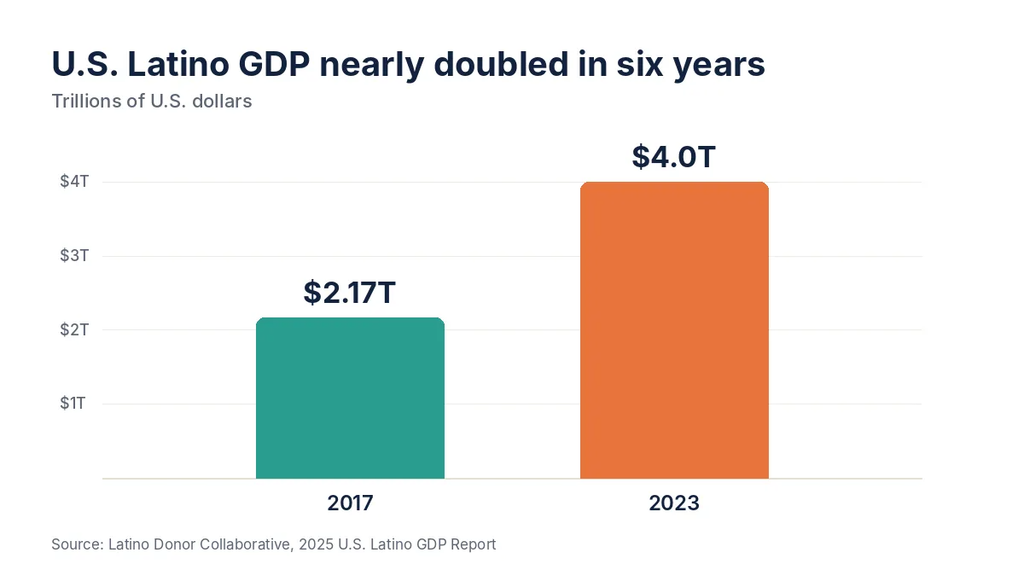
- $4 trillion economy. According to the Latino Donor Collaborative, U.S. Latino GDP hit $4 trillion in 2023. If it were its own country, it would be the fifth-largest economy in the world.
- $2.5 trillion in consumer spending. That same report found Latino consumer spending is growing more than twice as fast as non-Latino spending.
- Over 40 million Spanish speakers. Census data shows tens of millions of people in the U.S. speak Spanish at home.
- Most of the growth. Claritas reports that Hispanics make up nearly 20% of the U.S. population and are expected to drive about 80% of population growth through 2031.
It’s not just a California or Texas thing
A lot of people in Utah assume this doesn’t apply to them. But about 15% of Utahns are Hispanic or Latino, according to Census estimates analyzed by the Kem C. Gardner Policy Institute. That’s roughly one in every seven people.
In Utah County, you see it everywhere: in neighborhoods, at church, on job sites, and at the grocery store. Those are homeowners who need landscaping, families who need a dentist, and people looking for a good mechanic.
Less competition means easier wins
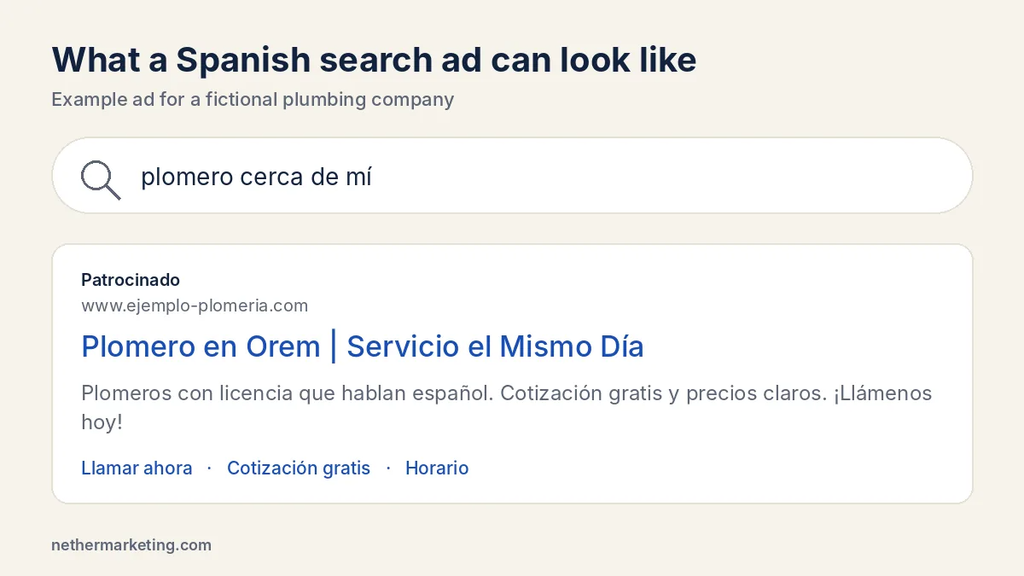
Here’s the part most business owners miss. When someone searches “plomero cerca de mí” (plumber near me), there are usually way fewer businesses competing for that search than the English version.
That means a small business that puts in even a little effort in Spanish can stand out fast. You don’t have to outspend the big guys. You just have to show up.
Bilingual doesn’t mean “doesn’t matter”
You might be thinking, “Most of these people speak English anyway.” And you’re right. Claritas found that 74% of Hispanic adults speak both English and Spanish.
But speaking English and preferring English aren’t the same thing. People trust businesses that speak their language, especially for big decisions like hiring a contractor or choosing a doctor. Spanish marketing isn’t about necessity. It’s about trust and respect.
Translation vs. Transcreation: Why Google Translate Isn’t Enough
The biggest mistake I see is a business owner copying their website into Google Translate and calling it done. I get why. It’s free and fast. But it usually does more harm than good.
What’s the difference?
Translation swaps words from one language to another.
Transcreation rewrites the message so it means the same thing and feels right in the new language. It keeps the tone, the humor, and the intent, not just the vocabulary.
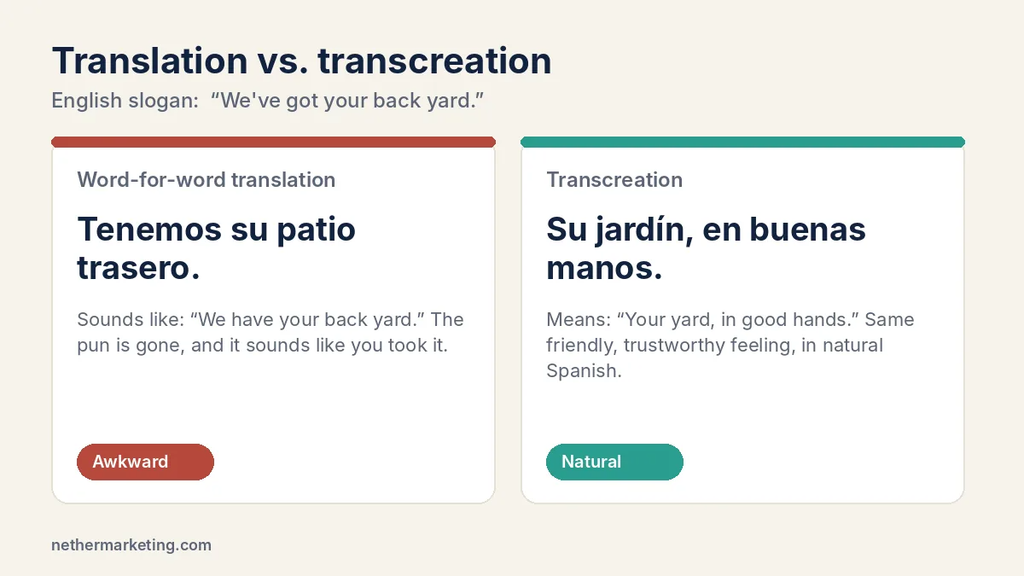
Here’s a simple example. Say your landscaping company’s slogan is “We’ve got your back yard.” It’s a fun pun in English. Translate it word for word into Spanish and the joke disappears. You’re left with something that sounds strange or makes no sense at all.
A transcreated version would drop the pun and go for the same feeling, something friendly and reliable, in words that sound natural to a Spanish speaker.
File: translation-vs-transcreation.webp · Alt: Side-by-side comparison of a word-for-word Spanish translation and a natural transcreated Spanish slogan
Spanish isn’t one-size-fits-all
Spanish changes a lot from country to country. Words that are normal in Mexico might mean something totally different in Puerto Rico, Argentina, or Spain.
For example, the word for “bus” is camión in Mexico, guagua in Puerto Rico and Cuba, and colectivo in Argentina. And camión means “truck” in a lot of other countries. If you get it wrong, you don’t just sound off. You sound like an outsider.
The fix is simple: know your audience. In Utah, most of the Hispanic community has roots in Mexico, so Mexican Spanish is usually a safe starting point. But it’s always worth asking your actual customers.
Tone builds trust
Spanish also has formal and informal ways to say “you” (usted and tú). Using the wrong one can come off as either too cold or too casual.
For most service businesses, usted is the safer choice. It sounds respectful, especially with older customers. Some younger, trendier brands use tú on social media to feel more friendly. Either can work. Just pick one and stay consistent.
Spanish SEO: Getting Found by Spanish-Speaking Customers
You can have the best Spanish content in the world, but it doesn’t matter if nobody finds it. That’s where Spanish SEO comes in.
Do Spanish keyword research (don’t just translate keywords)
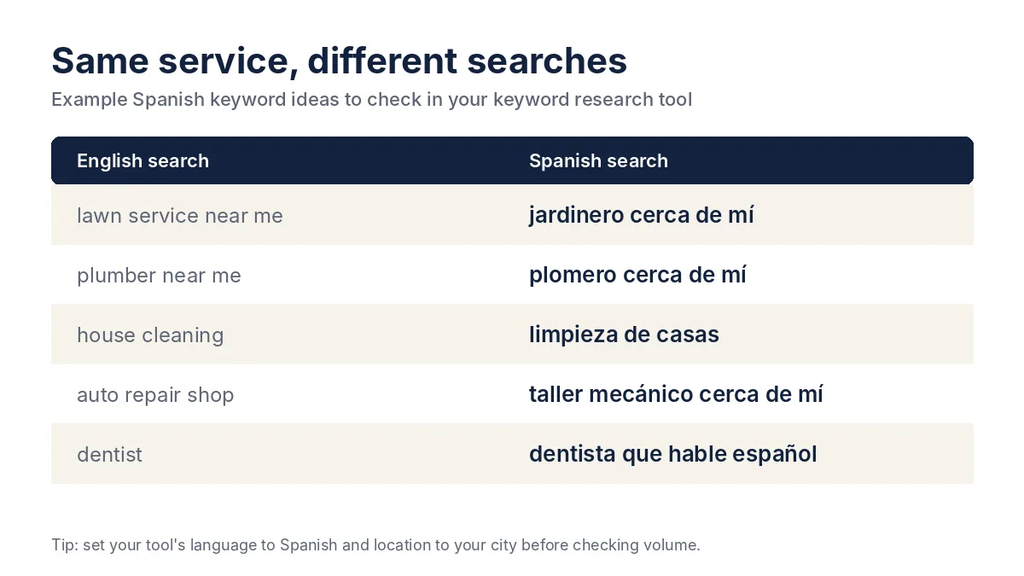
People don’t search in Spanish the same way they search in English. A direct translation of your English keywords will miss a lot.
For example, someone looking for a lawn service might search “jardinero cerca de mí,” “servicio de jardinería,” or even a Spanglish mix like “lawn service en Orem.” You won’t know which one gets the most searches until you check.
Tools like Semrush and Google Keyword Planner both let you set the language to Spanish and the location to your city. Look for:
- Search volume (how many people search it)
- Keyword difficulty (how hard it is to rank)
- Related questions people are asking
Build real Spanish pages
Instead of one page with a Spanish paragraph tacked on the bottom, create dedicated Spanish versions of your most important pages. Start with your homepage, your main service pages, and your contact page.
Use a clean URL structure, like yoursite.com/es/ for Spanish pages. Then add hreflang tags, which are small pieces of code that tell Google, “This page is the Spanish version of that English page.” That helps Google show the right version to the right person.
Most website builders like WordPress, Wix, and Squarespace have plugins or built-in settings for this, so you don’t need to be a developer.
Set up your Google Business Profile for Spanish speakers
For local businesses, your Google Business Profile is often more important than your website. It’s what shows up in Google Maps and the “map pack” at the top of search results.
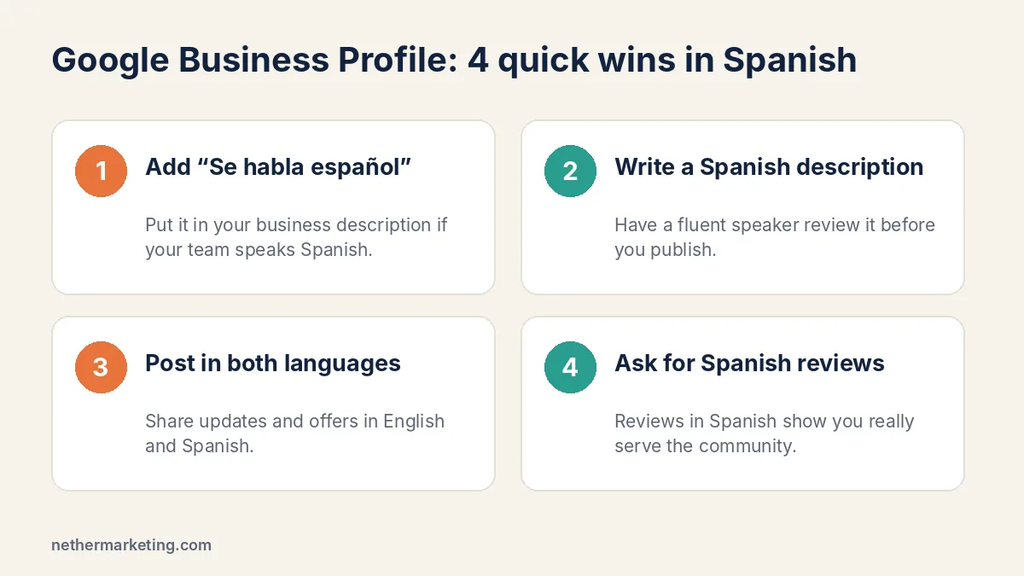
A few easy wins:
- Add a line to your business description in Spanish, like “Se habla español.”
- Check the attributes section of your profile for any language or accessibility options your category offers.
- Post updates in both languages.
- Ask your Spanish-speaking customers to leave reviews in Spanish.
That last one is big. Spanish reviews show other Spanish speakers that you actually serve their community, not just say you do.
Want help putting this into action? Reach out and we’ll send you a free Spanish SEO checklist for your business.
Your website is the foundation for all of this. If yours is outdated, here are 7 reasons small business website design is worth the investment. And with more people asking AI tools for recommendations, it’s worth reading why ChatGPT might be recommending your competitor instead of you.
Spanish Social Media Marketing
Social media is one of the easiest places to start with Spanish marketing because it’s cheap, fast, and personal.
Pick the right platforms
You don’t need to be everywhere. Focus on where your customers already spend time.
- Facebook is still huge in many Hispanic communities, especially Facebook Groups for local neighborhoods, churches, and buy-and-sell pages.
- WhatsApp is how a lot of Spanish-speaking families talk every day. A WhatsApp Business account lets customers message you for quotes the same way they text their cousins.
- Instagram and TikTok work well for younger, bilingual audiences, especially for visual businesses like restaurants, salons, and landscaping.
One account or two?
This is a common question, and there’s no perfect answer.
One bilingual account works well for most small businesses. You post in both languages, either in the same caption (English first, then Spanish) or by alternating posts. It’s easier to manage and shows that your business welcomes everyone.
Two separate accounts make more sense once you have enough Spanish content and followers to keep both active. If you can’t post regularly on both, stick with one.
Make content that feels local
The best Spanish content doesn’t look like an ad. It looks like a neighbor.
Show your team at work. Share customer shoutouts. Celebrate holidays your audience cares about, like Día de los Muertos or Mexican Independence Day on September 16. Post short videos answering common questions in Spanish.
If someone on your team speaks Spanish, put them on camera. A real face speaking the language does more for trust than any graphic ever will.
Paid Ads in Spanish (Google and Meta)
Organic marketing takes time. If you want results faster, Spanish paid ads can be a smart move, and they’re often less crowded than English ads.
Google Ads
In Google Ads, you can target people based on the language they use Google in. Set up a separate campaign just for Spanish with:
- Spanish keywords from your research
- Ads written in natural Spanish (not translated word for word)
- A Spanish landing page, so people don’t click and land on an English page
That last point matters a lot. Sending a Spanish-speaking customer to an English page is like inviting someone over and then not answering the door.
Facebook and Instagram ads
Meta lets you target ads by language too. You can also target people by location and interests, which is great for local businesses.
Keep the creative simple: a real photo, a clear offer, and one call to action. For example, “Cotización gratis” (free quote) with a button to message you on WhatsApp works really well for service businesses.
Start small and test
You don’t need a big budget. Start with a small daily budget, run it for a few weeks, and compare your cost per lead in Spanish versus English. Many businesses find their Spanish campaigns cost less per click simply because fewer competitors are bidding. Let the data tell you where to put more money.
Need Spanish landing pages that actually sound natural? See Nether Marketing’s website packages and pricing.
Customer Experience: The Part Most Businesses Forget
Here’s something nobody talks about. Spanish marketing doesn’t end when someone clicks your ad. It ends when they become a happy, repeat customer.
Imagine this: a customer sees your Spanish ad, calls your number, and the person who answers only speaks English. That customer is gone, and they probably won’t try again.
Make sure every touchpoint works in Spanish
Walk through your whole customer journey and ask, “Could a Spanish speaker get through this step easily?”
- Phone calls: Is there someone who can answer in Spanish, or at least a Spanish voicemail option?
- Contact forms: Are the form labels and confirmation messages in Spanish?
- Quotes and invoices: Can you send them in Spanish?
- Follow-ups: Do your appointment reminders and review requests go out in the customer’s language?
You don’t need a fully bilingual team
Not every business can hire bilingual staff right away, and that’s okay. Some simple options:
- Train one person on your team to handle Spanish calls and messages.
- Use text and WhatsApp, where you have a little more time to write a good reply.
- Use translation tools for internal help, but have a fluent speaker review anything customer-facing.
- Partner with a bilingual freelancer or agency for your marketing content.
The goal isn’t perfection. The goal is making a Spanish-speaking customer feel welcome from the first click to the final invoice.
Common Mistakes to Avoid
I’ve seen a lot of businesses try Spanish marketing and give up because it “didn’t work.” Usually, it’s because of one of these mistakes.
1. Relying only on machine translation
AI and translation tools are great for a first draft. But publishing them without a fluent speaker checking the result is risky. One awkward sentence can make your whole business look careless.
2. Treating it like a one-time project
Translating your website once and never updating it sends the wrong message. If your English site has new prices or services and your Spanish site doesn’t, customers notice. Keep both versions in sync.
3. Using stereotypes
Sombreros, maracas, and chili peppers are not a marketing strategy. Hispanic customers are as diverse as any other group. Speak to real needs, like quality, price, reliability, and family, instead of leaning on clichés.
4. Advertising in Spanish but serving only in English
We covered this above, but it’s worth repeating. If your marketing promises Spanish and your service doesn’t deliver, you lose trust fast.
5. Not tracking results separately
If you mix Spanish and English data together, you’ll never know what’s working. Use separate campaigns, separate landing pages, and UTM tags so you can see exactly how many leads come from your Spanish efforts.
Want to skip these mistakes and do it right the first time? Book a free call with Nether Marketing.
How to Get Started With Spanish Marketing This Month
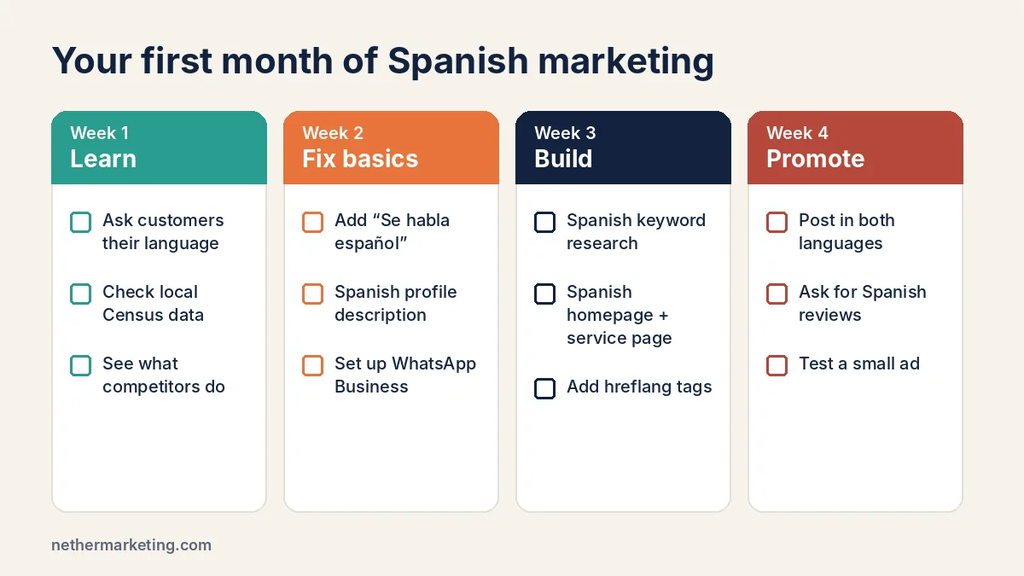
You don’t have to do everything at once. Here’s a simple four-week plan any small business can follow.
Week 1: Learn about your audience
- Ask your current customers what language they prefer.
- Look at your area’s demographics using free Census data.
- Check what your competitors are doing in Spanish (often, nothing).
Week 2: Fix the basics
- Add “Se habla español” to your Google Business Profile if someone on your team speaks Spanish.
- Translate your Google Business Profile description and have a fluent speaker review it.
- Set up a WhatsApp Business account.
Week 3: Build your foundation
- Do Spanish keyword research for your top three services.
- Create a Spanish version of your homepage and your most popular service page.
- Add hreflang tags so Google understands both versions.
Week 4: Start getting the word out
- Post on social media in both languages at least twice a week.
- Ask happy Spanish-speaking customers for reviews.
- Test a small Spanish ad campaign and track the results.
After the first month, look at what’s working and double down. Spanish marketing is a long game, but small, steady steps add up fast.
Want more ideas for growing a local business online? Read more on the Nether Marketing blog, check out our past work, or learn more about the Nether Marketing team.
Conclusion: Meet Your Customers Where They Are
Spanish marketing for small business isn’t about being trendy or checking a diversity box. It’s about reaching real people in your community who are ready to buy but aren’t hearing from you.
The opportunity is big. The competition is small. And the first steps, like a Spanish line on your Google profile, a few bilingual posts, and one good landing page, cost very little.
The businesses that start now will be the ones Spanish-speaking customers remember, trust, and recommend to their families. And in a lot of communities, word of mouth is everything.
So start small. Be genuine. And talk to your customers in the language they’re most comfortable with.
Ready to reach Spanish-speaking customers in your area? Get your free quote from Nether Marketing today.
Peer reviewers: [Name 1], [Name 2], [Name 3], [Name 4]
Publishing checklist (not part of the published text)
- Word count is 2,000+ (body is about 2,500 words before you add your own story)
- 8 images uploaded with the file names and alt text above, compressed to WebP under 150 KB, lazy loading on
- 7 internal links live: contact, pricing, about, blog, portfolio, and two blog posts (website design, ChatGPT)
- 4+ CTAs: intro, Spanish SEO, paid ads, mistakes, conclusion
- Focus keyword in the title, slug, meta description, intro, one H2, and an image alt
- Peer reviewer names added
- Page speed checked in Google PageSpeed Insights
Sources
- Latino Donor Collaborative: 2025 U.S. Latino GDP Report, Part One ($4 trillion Latino GDP; $2.5 trillion consumer spending)
- Claritas: 2025 Hispanic Market Report announcement (74% of Hispanic adults bilingual)
- Claritas: 2025 U.S. Hispanic Market Report (nearly 20% of population, 80% of growth through 2031)
- Kem C. Gardner Policy Institute: Utah race and Hispanic origin estimates (about 15% of Utahns Hispanic or Latino)
- Wikipedia: Spanish language in the United States (Census figures on Spanish spoken at home)